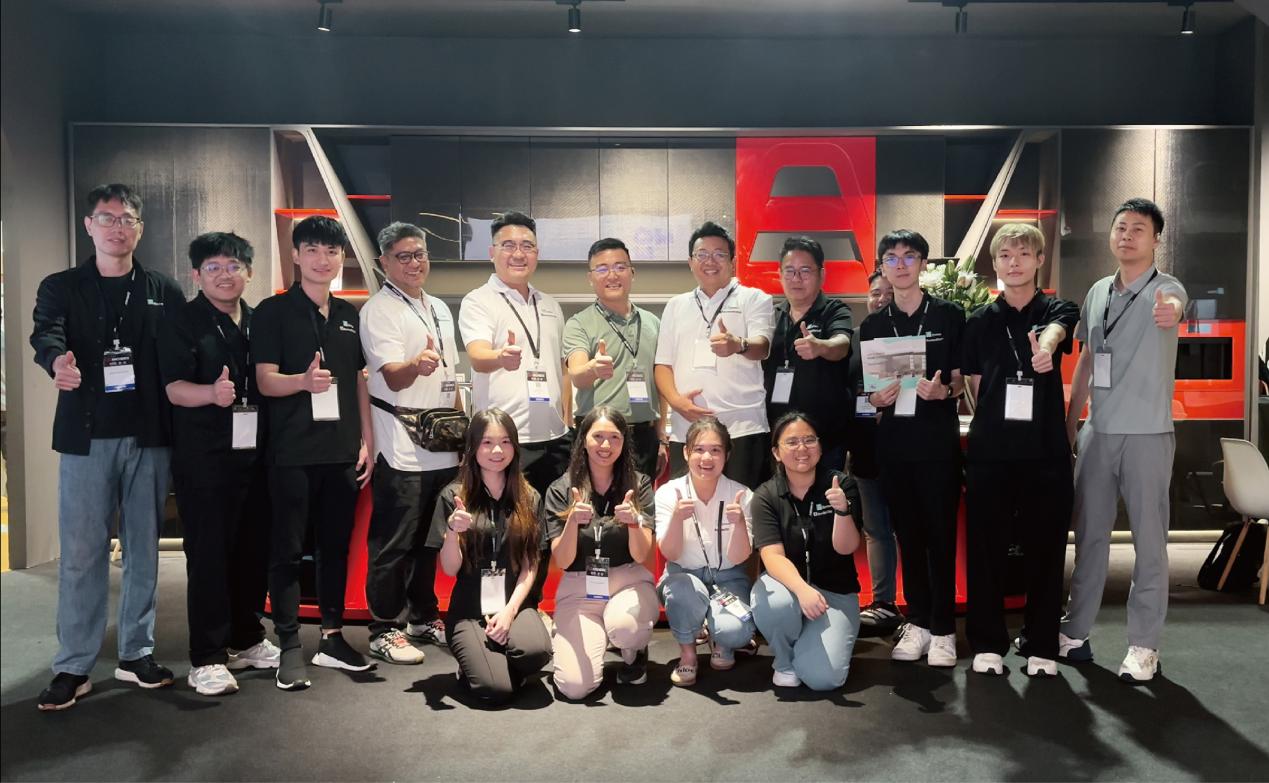




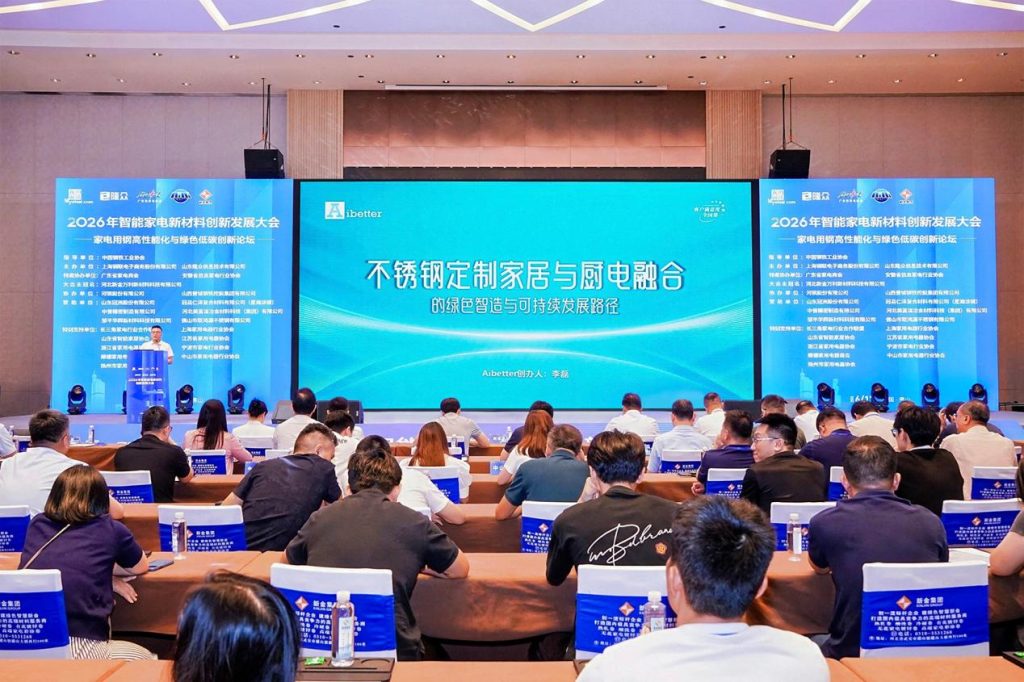
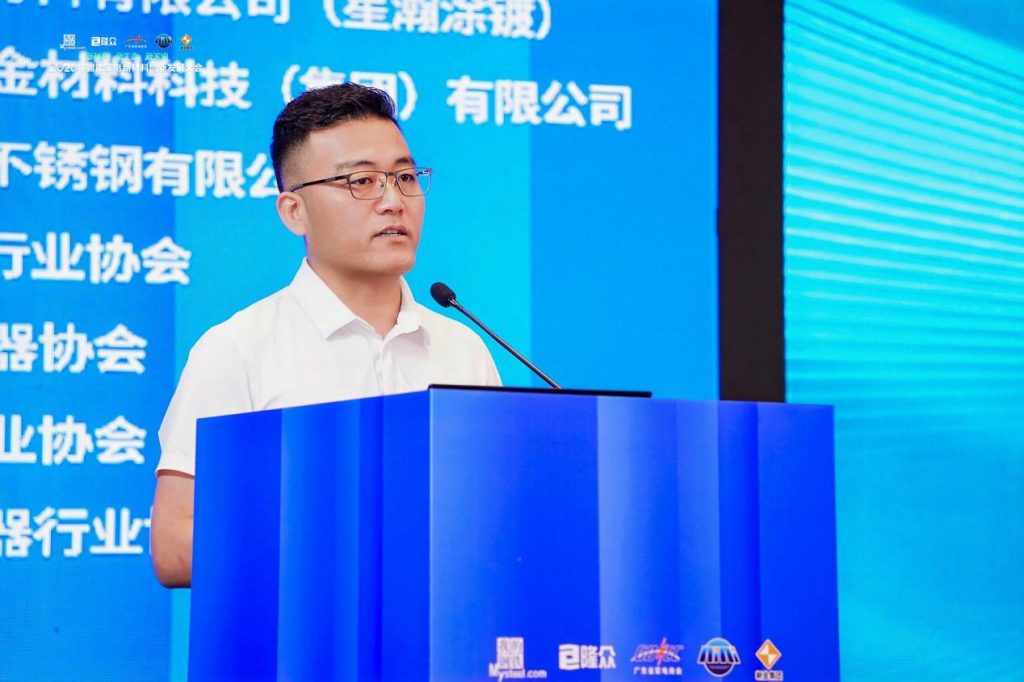
Recently, the 2026 Smart Home Appliances New Materials Innovation and Development Conference was successfully held under the attention of the industry. This conference focuses on core topics such as material innovation, cross-border integration and green development, and brings together the top wisdom of the entire industry chain to explore new directions for high-quality development of the home appliance industry. Li Lei, founder of Aibetter, was invited to attend this conference and delivered a keynote speech on “Green Intelligent Manufacturing and Sustainable Development Paths for the Integration of Stainless Steel Customized Home Furnishings and Kitchen Appliances” at the core forum. He dismantled the underlying logic of industry growth from the perspective of an industry pioneer and proposed a new evolutionary path for the deep integration of stainless steel home furnishings and kitchen appliances, which aroused widespread resonance in the audience.
Change has arrived: the era of single products has changed, and the ecological era has officially arrived
Driven by the dual drive of household consumption upgrades and industrial iteration, the kitchen appliance industry has already gone through the era of incremental growth in the explosion of single products. When single-function hardware competition enters the red ocean of stock, the growth boundaries of the industry are being redefined – the industrial barriers between kitchen appliances and home furnishings are accelerating to dissolve, and the shift from single-product competition to ecological competition is an irreversible wave of the times.
For consumers, the purchase logic has already undergone fundamental changes: rather than choosing a refrigerator or a set of stoves individually, people are more willing to stop for an ideal kitchen with complete functions, smooth experience, and unified style. Deep changes on the demand side are forcing the supply side to complete a systematic transition from “selling products” to “selling space.”
The second growth curve: from single product sales to space solutions
Where is the next growth fulcrum for the kitchen appliance industry? Mr. Li pointed out in his speech that the answer lies in the underlying logic of user needs. The current consumption decision-making has completed the switch from “single point purchase” to “scenario purchase”, which supports two key industrial upgrades:
One is an upgrade from hardware to system. True intelligence is never about adding a display screen to kitchen appliances, but about building a complete closed loop of “perception-decision-execution” in the space, allowing the equipment to actively adapt to people’s usage habits and achieve intelligent linkage in all scenarios.
The other time is the upgrade from product to solution. The unit price of integrated space solutions can reach 3-5 times that of a single product. At the same time, it can significantly increase user stickiness and life cycle value. It is the core direction for the industry to break through the growth ceiling.
The key carrier to achieve these two upgrades is stainless steel custom home furniture – it allows kitchen appliances to truly move from a physical combination of “embedded in cabinets” to a system integration of “integrated into space”.
Deep integration: the next main battlefield in the kitchen appliance industry
Many people mistakenly think that “embedded” means integration. In fact, the industry is still mostly in the “assembly” stage. In the embedded 1.0 era, only size adaptation was pursued, and kitchen appliances could be stuffed into cabinets. The two were still two independent systems. In the embedded 2.0 era, appearance panels were unified and basic operations were linked, but the underlying logic was still the later splicing of different products.
The true deep integration is that “the cabinet is the carrier, the structure is the interface, and the system is the whole”. Integrated planning is carried out from the initial stage of design, rather than assembly before delivery. This is just like the mobile phone industry’s evolution from scattered component assembly to SoC system-level chip integration. Performance, efficiency, and experience will all see an order of magnitude leap.
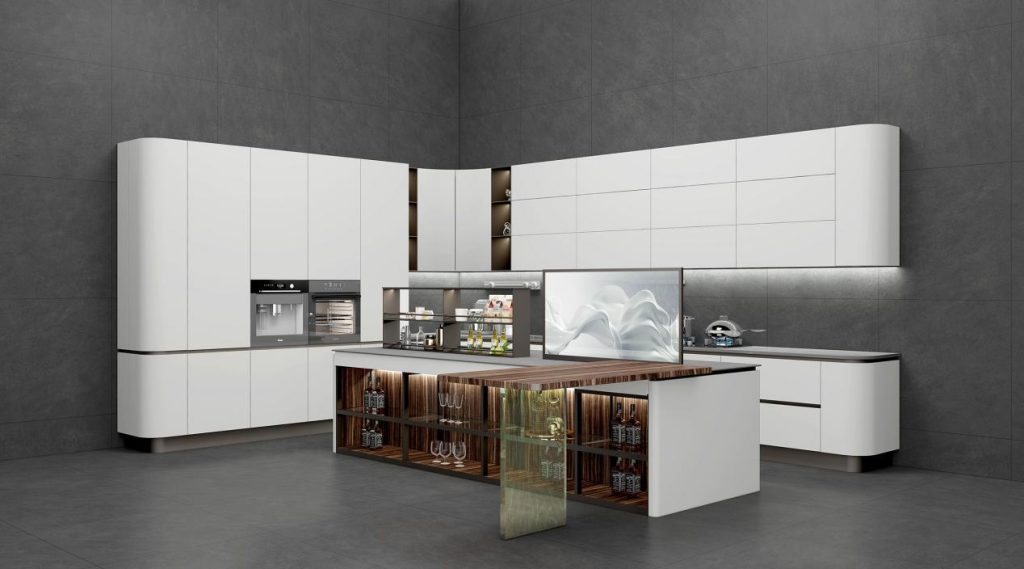
Why stainless steel home? The best carrier of natural fusion
Stainless steel customized home furnishings can become the optimal solution for kitchen appliance integration, due to natural adaptation in all dimensions:
The metal is of the same origin, and the performance matches: it has the same properties as the metal shell of kitchen appliances, and the temperature and humidity tolerance are synchronized, avoiding problems such as deformation and adaptation failure from the root;
Integrated structure, safe and efficient: The cabinet itself does not need an additional frame to support its own load. The metal thermal conductivity is suitable for thermal management of the steam oven. The independent wiring of the metal cavity is waterproof and safer than wooden cabinets. High-precision processing also provides a manufacturing basis for interface standardization;
Integration of functions and upgraded experience: The cabinet can become a unified control interface, function extension space and intelligent perception carrier for kitchen appliances, realizing full-link unification of interaction, storage and lighting;
The design is unified and integrated: the same material and technology are combined with seamless welding to say goodbye to splicing gaps. The texture can be extended to the whole house to achieve the integration of space style.
In short, the stainless steel cabinet is not a “shell for kitchen appliances”, but a structural extension of the kitchen appliances.
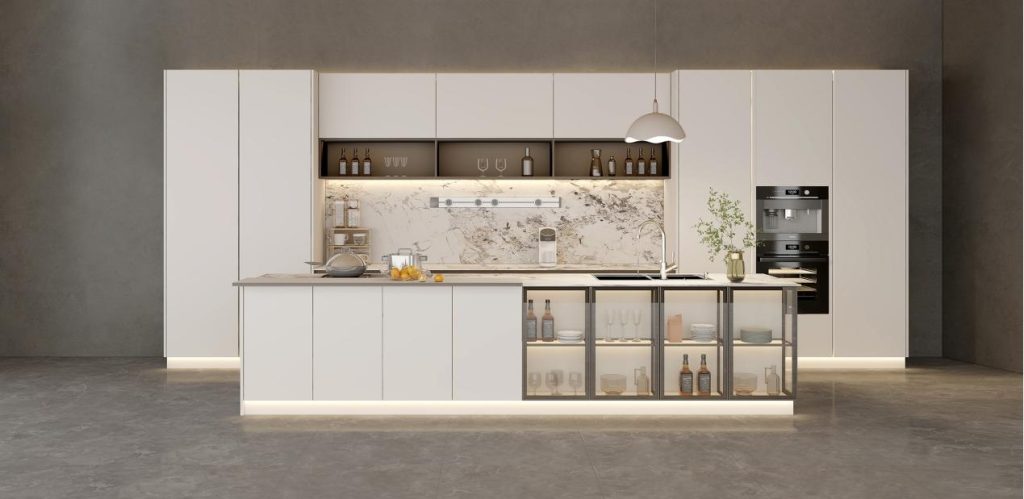
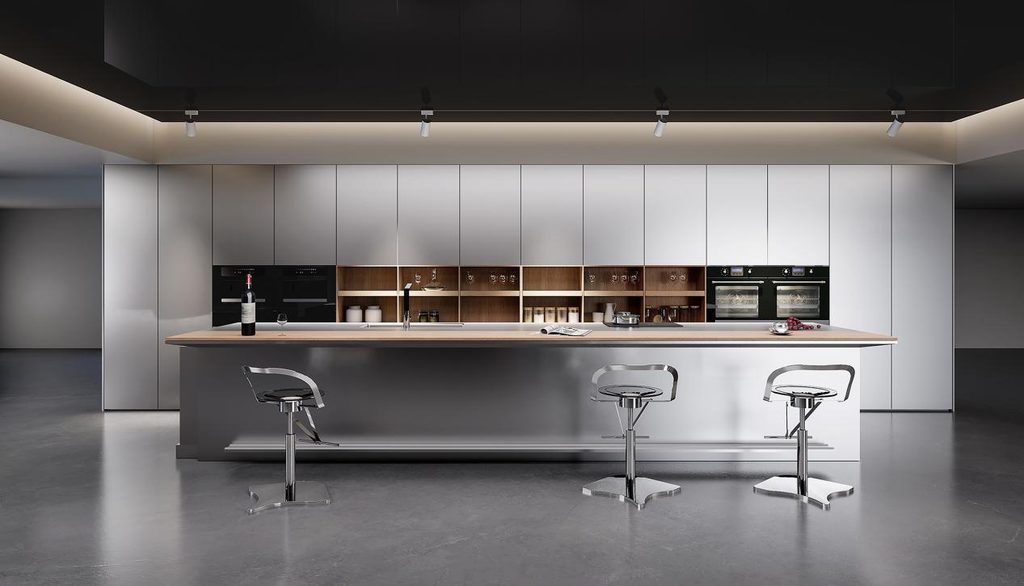
Proof of implementation: Aibetter industry-leading practice
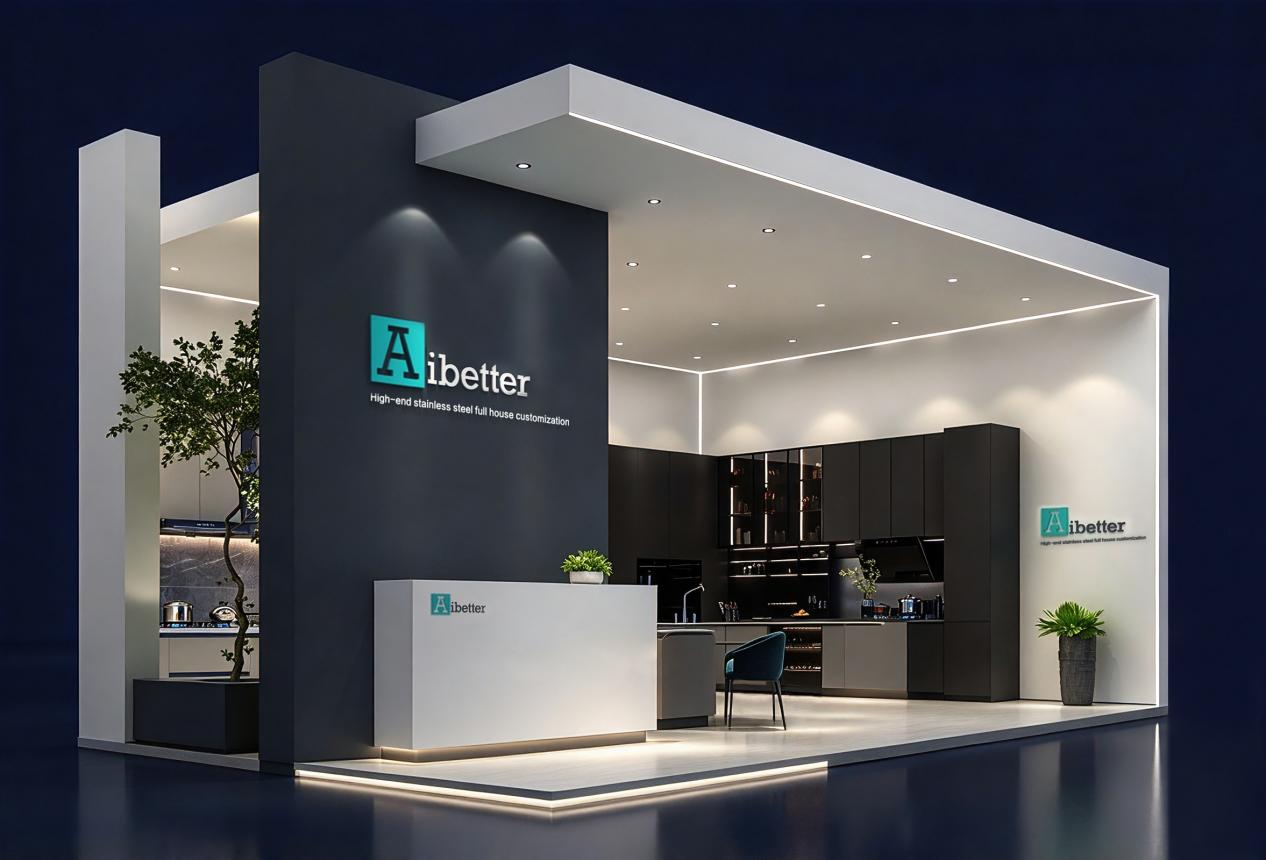
All trend judgments must ultimately be verified by product implementation. As an industry pioneer in whole-house integration in the field of stainless steel customized home furnishings, Aibetter has already turned “deep integration” from theory into a tangible reality.
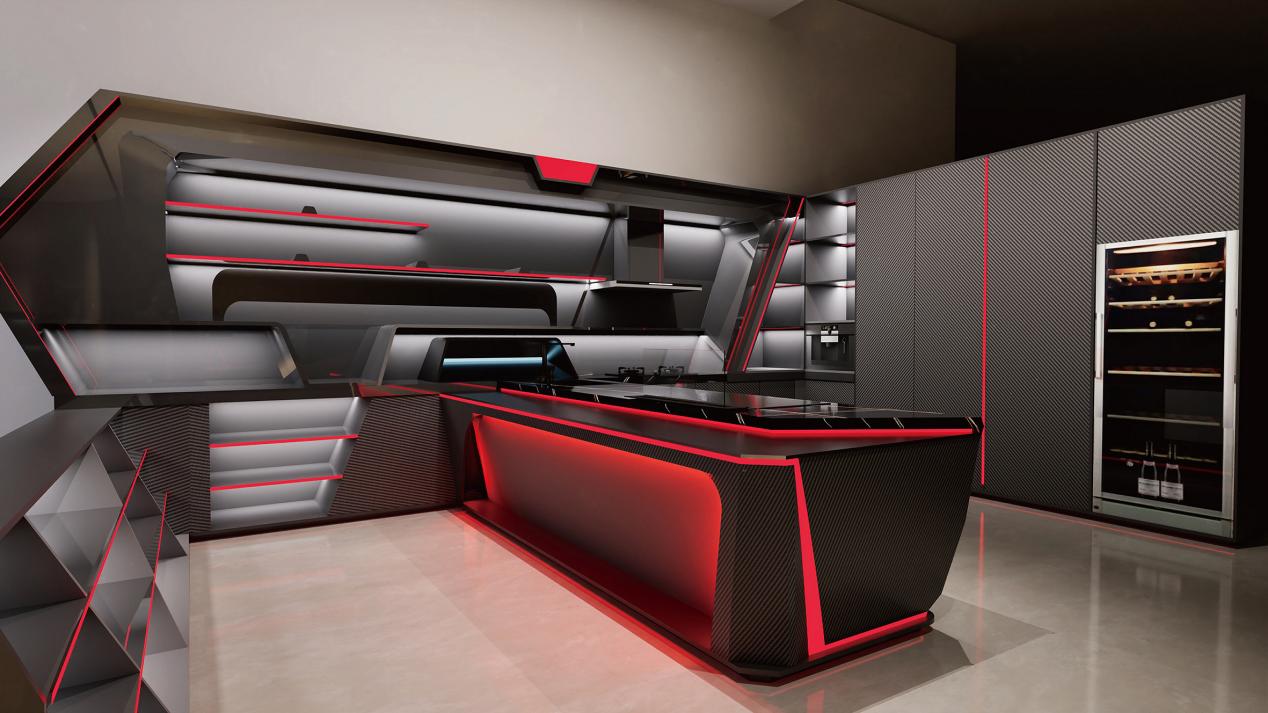
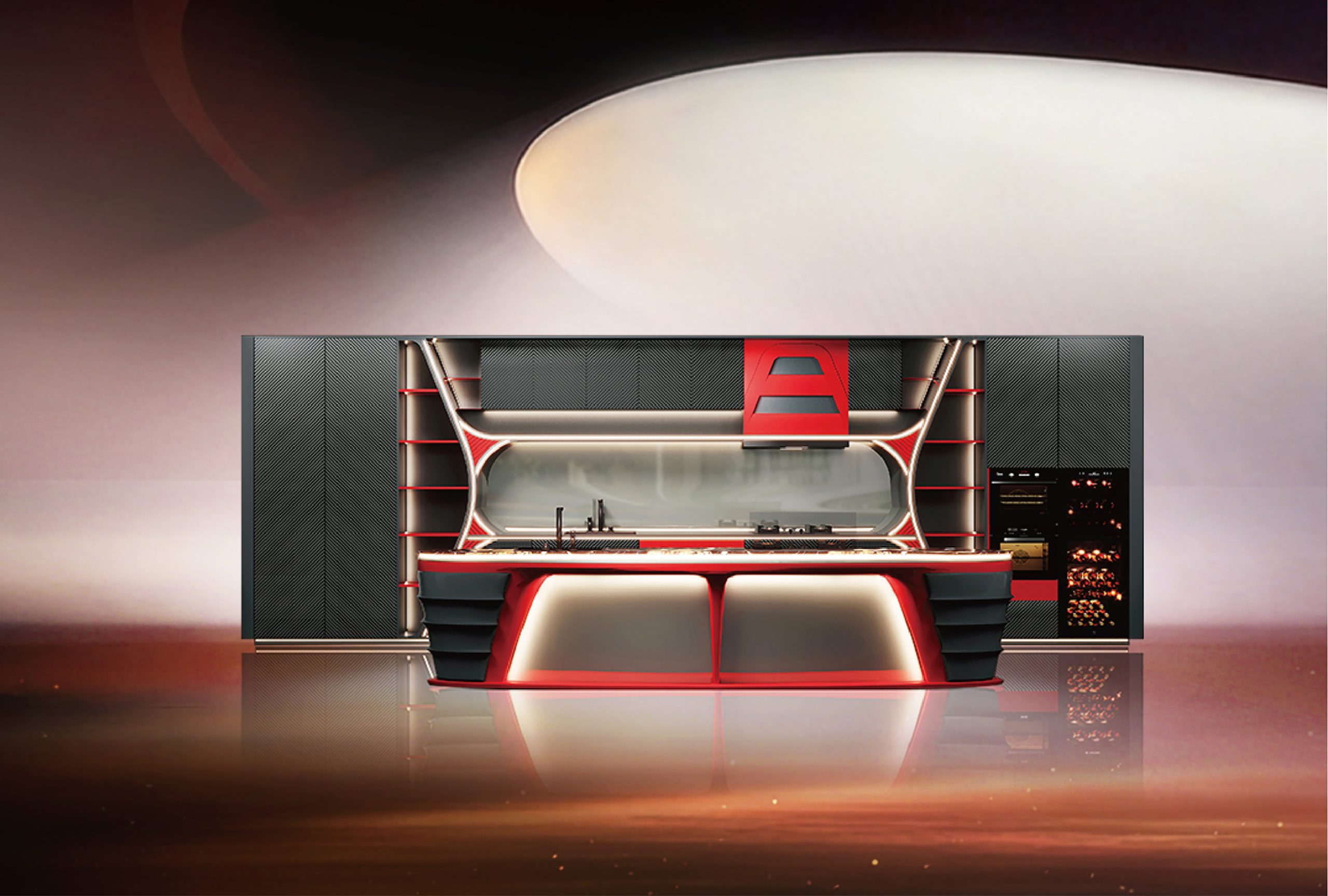
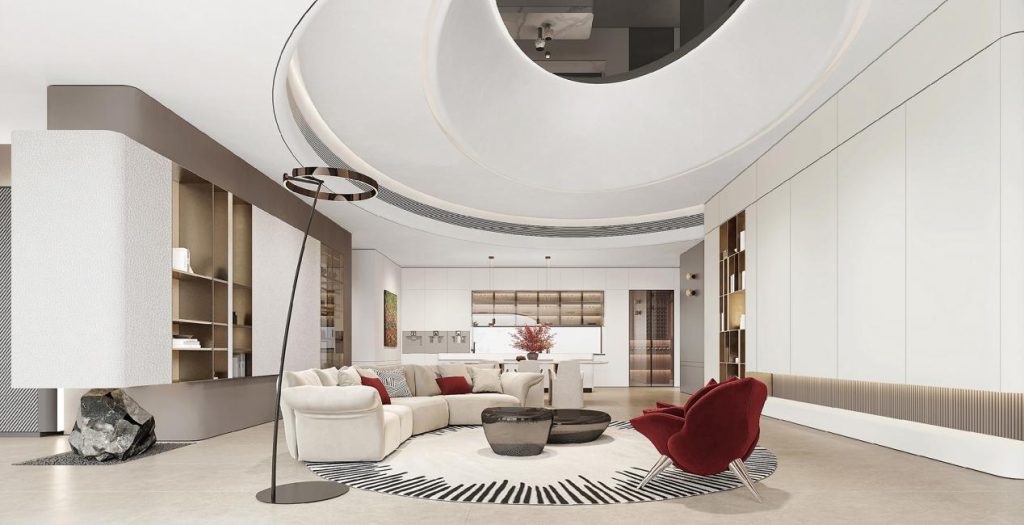
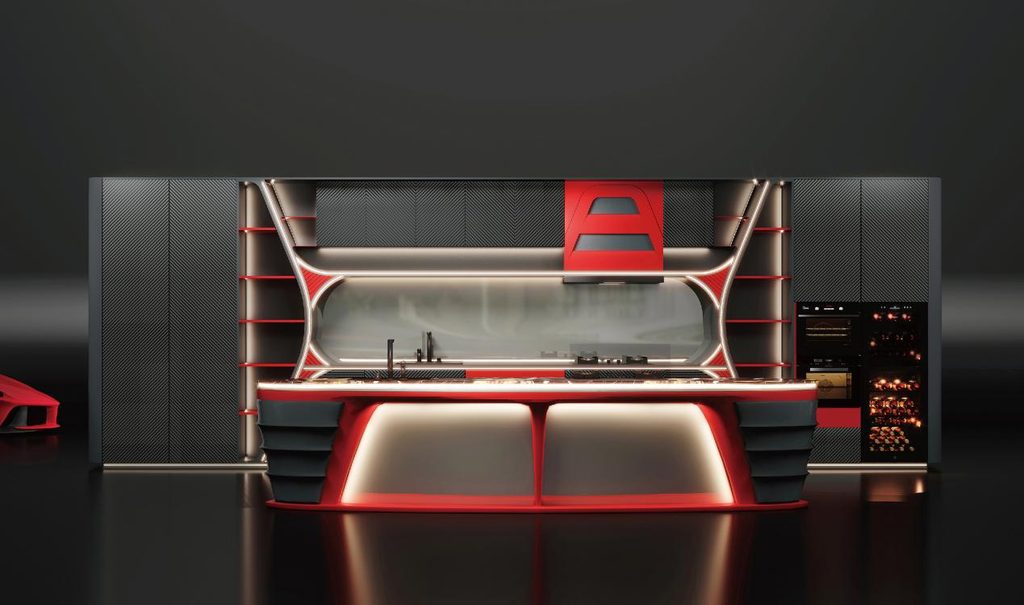
Aibetter benchmark product, the supercar series Ferrari kitchen, realizes the seamless and fully embedded integration of all types of kitchen appliances such as refrigerators, hoods, wine cabinets, etc., forming a complete unity from appearance to functional interaction, completely breaking the boundaries between kitchen appliances and cabinets. Not just in the kitchen space, Aibetter also extends the integration logic to the whole house scene, allowing all kinds of home appliances such as bedroom smart systems to be seamlessly integrated into stainless steel customized cabinets, truly realizing an integrated intelligent experience in the whole house space. At this conference, Aibetter implementation results were also highly recognized by industry experts and colleagues present, providing a reference practical sample for the integration and transformation of the entire industry.
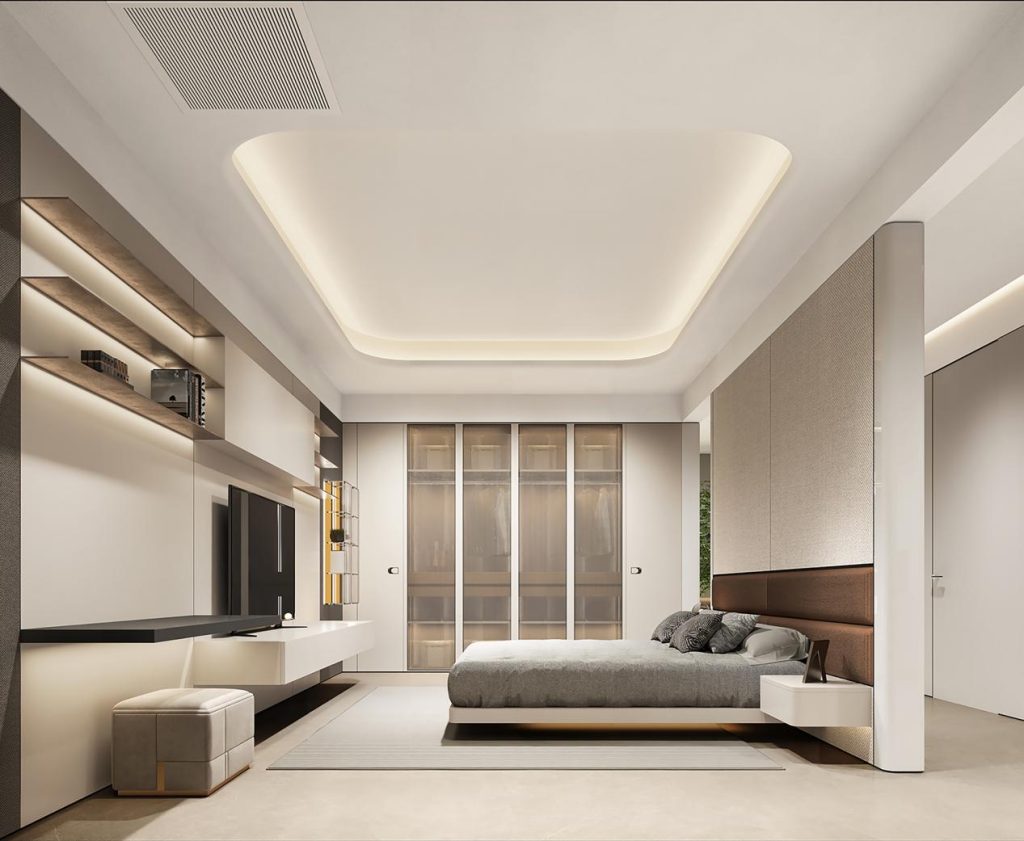
Value reconstruction: integration creates a win-win situation for all parties
The deep integration of stainless steel customized home furnishings and kitchen appliances is not a simple summation of the industry, but a reconstruction of value across the entire chain: for users, one-time design, delivery, and after-sales service completely ends the shirk of responsibility between cabinets and kitchen appliances; for brands, the shift from selling equipment to selling space solutions significantly increases unit price and user stickiness; for installation enterprise channels, cross-party coordination is reduced, construction time and after-sales costs are reduced, and word-of-mouth efficiency is improved in both directions. For the entire industry, this is the concrete implementation of the national dual-carbon strategy.
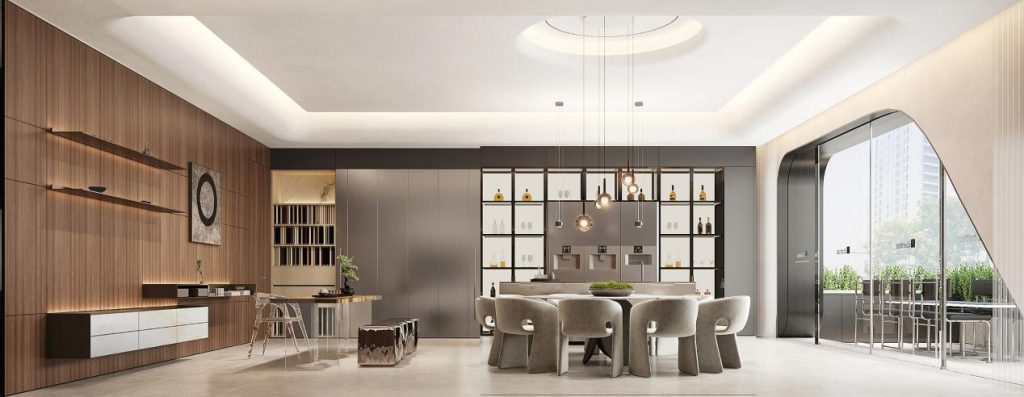
Green intelligent manufacturing: a concrete path to sustainable development
Stainless steel has zero formaldehyde and is low-carbon throughout its life cycle. It is the core material of green homes. At the same time, as a 100% recyclable material, it can be recycled infinitely without degradation in performance, and the recycling energy consumption is only 5% of that of original production. The cabinets and kitchen appliances are made of the same metal, and can be recycled without sorting after scrapping. The recycling rate exceeds 90%, truly opening up the closed loop of circular economy. Aibetter integration practice is the vivid implementation of the “3060” dual carbon goal in the field of home appliances, providing a feasible development path for the industry’s green transformation.
The metals are of the same origin, the structure is complementary, and the functions are integrated. When stainless steel customized homes and kitchen appliances move from “physical embedding” to “system integration”, green smart creation is no longer a distant industry direction, but the inevitable result of industrial implementation; sustainable development is no longer an empty slogan, but a clear development path that can be implemented and verified.

This time, Li Lei, the founder of Aibetter, was invited to the podium at the industry conference, which is not only the industry’s recognition of Aibetter pioneering exploration, but also the integration signal sent by the stainless steel home furnishing track to the entire industry. Thanks to the high-quality communication platform established by this conference and industry associations, in the future, Aibetter will continue to delve into the track of stainless steel whole-house customization and kitchen appliance integration, promote green and smart manufacturing upgrades with technological innovation, and work with partners across the industry to jointly explore the broad future of sustainable development of the home furnishing industry.